Written by Morten Andersen · Last reviewed November 2025.
A legal marriage in Thailand is entirely possible for foreigners, but it is a paperwork exercise that happens at a district office, not on the beach.
The key document is an affirmation of freedom to marry from your own embassy, which must then be translated into Thai and legalised before it can be used.
Many couples marry legally at home and hold a symbolic ceremony at the resort, which keeps the wedding day free of bureaucracy. Both routes are valid, so decide early.
To marry legally in Thailand, foreign couples obtain an affirmation of freedom to marry from their embassy in Bangkok, have it translated into Thai and legalised by the Ministry of Foreign Affairs, then register the marriage in person at a local district office, known as an amphur, with two witnesses. The administrative process commonly takes around three to five working days. Because the legal step is a registry matter, many couples complete it separately and treat the resort ceremony as symbolic.
The standard process for a foreign couple marrying legally in Thailand. Confirm the current detail with your embassy and the district office, since requirements change.
Each partner obtains an affirmation, sometimes called an affidavit of freedom to marry, from their own embassy or consulate in Bangkok. It confirms you are legally free to marry and usually requires an appointment, so book it in advance.
The embassy document must be translated into Thai by an accredited translator. Passports and any divorce decree or former spouse's death certificate are typically translated and certified at the same stage.
The translated affirmation is legalised by the Thai Ministry of Foreign Affairs, Department of Consular Affairs, Legalisation Division. This step validates the translation for use by the district office and adds a little time, so plan for it.
Both partners attend a local district office, the amphur or khet, in person with the legalised documents, passports and two witnesses who bring their own ID or passport. The registrar reviews the papers and, if all is in order, records the marriage.
You receive a Thai marriage certificate. To have the marriage recognised at home, you will usually need the certificate translated back into your own language and legalised, so factor in that final step before you leave.
The district office registration is an administrative act, not a celebration. The romantic ceremony at your resort is separate, so most couples register quietly and keep the wedding day for the symbolic ceremony and the party.
Many foreign couples complete the legal marriage in their home country, before or after the trip, and hold a fully symbolic ceremony in Thailand. It removes all paperwork from the wedding day and is completely valid as a celebration.
Embassy appointments, translation and legalisation all take time, so do not arrive expecting to marry the next day. Build several working days into the trip, or handle the documents before you travel where possible.
A Thai marriage is generally recognised abroad once the certificate is translated and legalised, but rules vary by country. Confirm what your home authority requires so the marriage is registered correctly when you return.
The legal process itself is inexpensive, with the main costs being embassy affirmation fees, accredited translation, legalisation at the Ministry of Foreign Affairs and a small registration fee at the district office, reviewed November 2025.
The larger expense is usually the help around it, namely a lawyer or a planner's concierge to manage appointments, translation and the trip to the district office, which many couples find well worth it on a destination wedding.
Treat the figures as indicative and confirm current fees with your embassy and a Thai legal adviser, since government charges and translation rates change and vary by office.
Figures are indicative ranges reviewed November 2025 and will move with season, guest count, and exchange rates. Confirm directly with each venue.
A Thai wedding planner or a legal concierge takes the bureaucracy off your hands, booking the embassy appointment, arranging translation and legalisation and escorting you to the district office. On a destination this far from home, that support is invaluable.
A local lawyer experienced in marriage registration can confirm the current documents, handle translation and legalisation and smooth the district office visit, which is reassuring if your situation involves a divorce or a previous marriage.
If you marry legally at home and hold a symbolic ceremony in Thailand, a celebrant designs and leads a personal ceremony with no legal constraints, which is why the symbolic route is so popular at resorts.
Tell us your date and your guest count, and whether you want a legal or symbolic ceremony. We reply within 48 hours with the right planner to handle it, at no cost to you.
Yes. Foreign couples can register a legal marriage at a Thai district office after obtaining an embassy affirmation of freedom to marry, having it translated into Thai and legalised. Both partners must attend in person with two witnesses.
At a local district office, known as an amphur or khet. The registrar reviews your legalised documents and, if everything is in order, records the marriage, often on the same day.
Allow around three to five working days for the administrative steps, covering the embassy appointment, translation, legalisation and the district office visit. Starting some paperwork before you travel can shorten the trip.
Yes, two witnesses are required at the district office, and they must bring their own original Thai ID card or passport. Your planner can often help arrange suitable witnesses if you are travelling without them.
No. A beach or resort ceremony is symbolic. The legal marriage is the separate registration at a district office, which is why many couples marry legally at home and treat the Thai ceremony as symbolic.
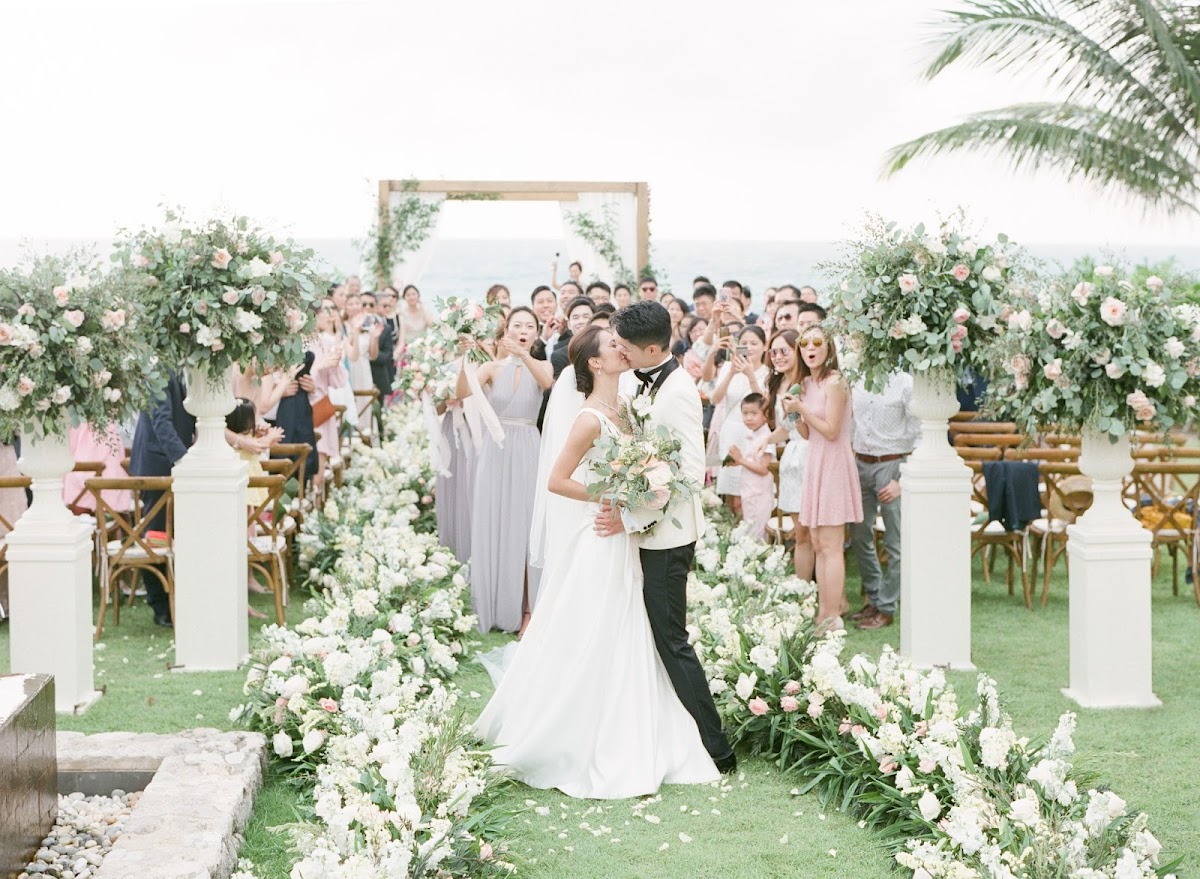
Images are licensed editorial stock for illustration. They do not depict a specific venue.
One considered letter a month. New venues we rate, the seasons to chase, and the logistics couples underestimate.
Join free and get our season by destination cheat sheet, the best months to marry in each place.
Every real cost category, indicative ranges by destination, and a season calendar, in one clear worksheet. Enter your email and we will send it over.