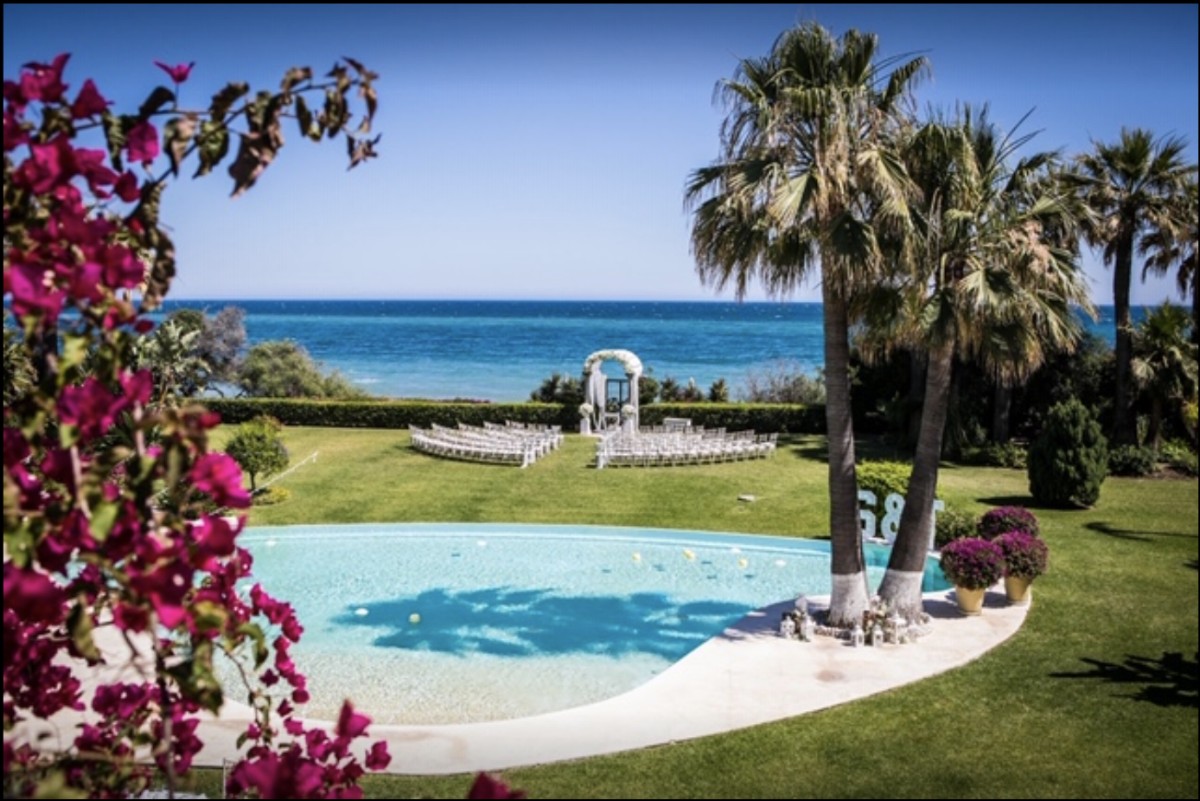
Spain is one of the most beautiful places to celebrate a wedding, and one of the harder places for two foreigners to marry legally on the day. The civil registry generally requires at least one partner to have been legally resident in Spain, which most destination couples are not.
The practical truth is that the vast majority of foreign couples complete the legal marriage at home and hold a symbolic ceremony in Spain, which can look and feel exactly like the real thing.
This page sets out both routes honestly so you can plan with open eyes. Confirm specifics with the local civil registry, your consulate or a Spanish lawyer.
Two non resident foreigners usually cannot have a civil marriage in Spain, because the civil registry typically requires at least one partner to have been a legal resident, commonly for around two years. Most couples therefore marry legally in their home country and hold a symbolic ceremony in Spain. If one of you is Spanish or a Spanish resident, a full civil marriage in Spain becomes achievable with apostilled documents.
Civil or symbolic.
Civil marriage in Spain
A legally binding ceremony at the local civil registry or court. Open to couples where at least one partner is Spanish or a legal resident. For two foreign nonresidents it is generally not available, because of the residency requirement.
Best for couples with a Spanish or resident partner, who want the legal marriage to happen in Spain itself.
Legal at home, symbolic in Spain
You sign the legal paperwork in your home country, quietly and ahead of time, then hold a symbolic ceremony in Spain led by a celebrant or officiant. The Spanish celebration carries all the emotion and none of the residency hurdle.
Best for the great majority of foreign destination couples. Simple, flexible and reliable.
The documents and the process.
Confirm eligibility
Establish that at least one of you meets the residency condition at the relevant civil registry. Where two foreigners are involved, the registry generally expects one partner to have been a legal resident in Spain, commonly for around two years. Rules can vary by region and are applied by the local registry, so check yours directly.
Gather and legalise documents
Expect to provide valid passports, long form birth certificates, proof of single status, and divorce or death certificates where relevant. Foreign documents must carry the Hague Apostille and be officially translated into Spanish by a sworn translator. A certificate of residence from the local town hall, the empadronamiento, is also commonly required.
Apply at the civil registry
Applications are made to the Registro Civil or the district court where one of you resides. Both partners usually attend in person, and an interview or short hearing is often part of the process. Allow plenty of time, as the registry can take weeks or months to process the file.
Hold the ceremony and register it
Once approved, the civil ceremony takes place before the registrar or authorised official, with witnesses. The marriage is then recorded in the Spanish civil register, and you can request the certificate that you will later use to register the marriage in your home country if needed.
Legal at home, celebration in Spain.
Most foreign couples sign the legally binding paperwork in their home country, often at a registry office in a short and private appointment, and then travel to Spain for a symbolic ceremony. A celebrant or officiant leads a personal service with vows, readings and rings, and your guests rarely know or mind that the signing happened earlier. This route sidesteps the residency rule entirely, gives you complete freedom over date and location, and is what your planner will most likely recommend. Keep your home marriage certificate safe, since it is the document that proves you are married worldwide.
Told straight.
Apostille and translation
Any foreign document used in the Spanish process needs the Hague Apostille and a sworn Spanish translation. Start this early, as apostilles can take time to obtain from your home authorities, and some certificates must be recently issued.
Catholic and religious weddings
A Catholic church wedding can have civil effect in Spain, but it requires its own preparation through the parish and diocese, including documentation and sometimes a marriage course. Discuss this well ahead with the church and your planner.
Recognising the marriage at home
A legally completed Spanish marriage is generally recognised in your home country, though you may need to register the certificate there. If you marry at home and celebrate symbolically in Spain, your home certificate already does this job.
Get professional help
Rules differ by region and change over time. A Spanish wedding planner or lawyer who handles foreign couples will confirm what your specific registry requires and keep the paperwork on track. This page is general guidance, not legal advice.
We will find a planner who knows the Spanish paperwork.
Tell us your region and date in Spain. We reply within 48 hours with planners who handle the legal and symbolic routes, at no cost to you.
We curate on merit. Venues and planners cannot buy a higher ranking.
Marrying in Spain, answered.
Can two foreigners legally marry in Spain?
+
Usually not without residency. The civil registry generally expects at least one partner to have been a legal resident in Spain, commonly for around two years. Two nonresident foreigners therefore tend to marry legally at home and hold a symbolic ceremony in Spain instead.
What if one of us is Spanish or a resident?
+
Then a full civil marriage in Spain is achievable. You apply at the civil registry where the resident partner lives, with apostilled and sworn translated documents, and complete the ceremony before the registrar with witnesses.
Is a symbolic ceremony a real wedding?
+
It is a full ceremony in every emotional sense, with vows, rings and a celebrant, but it does not create the legal marriage by itself. That is why couples sign the legal paperwork at home first. To guests, the symbolic ceremony is the wedding.
What documents will we need?
+
For a civil marriage, expect passports, long form birth certificates, proof of single status, and any divorce or death certificates, all carrying the Hague Apostille and sworn translation into Spanish, plus a certificate of residence. For the symbolic route, you simply need your home marriage paperwork.
Does a Catholic wedding count legally?
+
A Catholic church wedding can have civil effect in Spain, but it needs its own parish and diocesan preparation and documentation. If a religious ceremony matters to you, start the church process early and confirm the civil registration steps with the parish.
The newsletter for couples planning abroad.
Honest venue notes, seasonal timing and the logistics couples underestimate. A few considered emails a month, never a flood.
Join free and get our season by destination cheat sheet, the best months to marry in each place.
Related pages.
The Destination Wedding Budget Planner
Every real cost category, indicative ranges by destination, and a season calendar, in one clear worksheet. Enter your email and we will send it over.