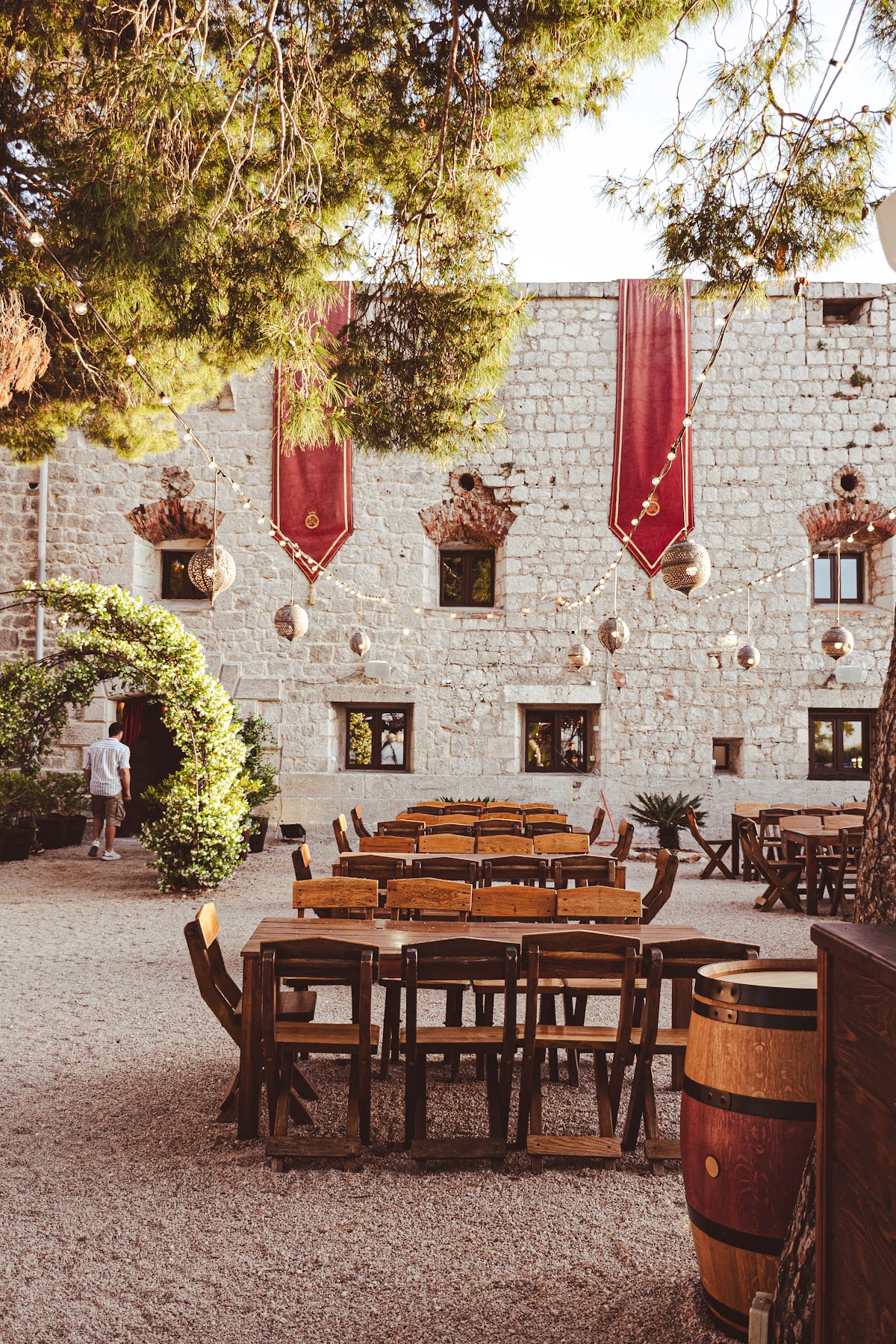
A legal civil wedding in Croatia is genuinely achievable for foreign couples, with the right paperwork in order.
The two things that catch people out are the apostille on every document and the official Croatian translation.
Start early. Documents must be recent, submitted to the local registry around thirty days before, and the timing is strict.
Foreign couples can marry legally in Croatia with a civil ceremony. You will need valid passports, recent birth certificates, and a certificate of free marital status, each carrying an apostille and translated into Croatian by a court interpreter. Documents are submitted to the local registry office, the Maticni Ured, around thirty days before the wedding, and you need two witnesses on the day. Always confirm the detail with the registry office in your chosen town.
The documents you will need
A legal civil wedding in Croatia rests on a short list of documents, but each one has to be exactly right. You will need a valid passport for each partner, a birth certificate for each, and a certificate of free marital status, which proves you are both legally free to marry. If either of you has been married before, you will also need the relevant divorce decree or the death certificate of a former spouse.
The detail that matters is recency. Croatian registry offices generally want a birth certificate issued within ninety days of the wedding, so do not request it too early. The certificate of free marital status, sometimes called a certificate of no impediment, is the document many couples find least familiar, so check with your home authority how to obtain it and how long it takes.
The apostille and the translation
Two extra steps trip up more couples than anything else. First, almost every document must carry an apostille, an internationally recognised certification stamp. For countries in the Apostille Convention, including the United Kingdom, the United States, Germany, the Netherlands and Australia, you obtain it from the relevant authority at home, often a foreign affairs ministry, a court, or a designated notary. If your country is not party to the convention, a more involved consular legalisation process applies instead.
Second, all of your documents must be translated into Croatian by an official court interpreter, a sworn translator recognised by the Croatian courts. A casual translation will not be accepted. Plan for both steps to take time, and do them in the right order, the apostille goes on the original document before it is translated, so that the translation covers the apostille as well.
The timeline and the ceremony
The paperwork is submitted to the local registry office, the Maticni Ured, in the municipality where you intend to marry. As a rule, documents go in around thirty days before the wedding, so the whole process needs to be planned backwards from your date with a comfortable margin. Because the documents must also be recent, there is a real window to hit, neither too early nor too late, which is why couples often lean on a local planner to manage it.
On the day, a civil ceremony requires two witnesses, each over eighteen and carrying valid identification. If neither partner speaks Croatian, you will need a court appointed translator present for the ceremony itself, separate from the document translation. A civil ceremony can take place at the registry office or, in many municipalities, at an approved external location, which is how couples marry legally on the coast or at a villa rather than in an office.
Civil, religious and symbolic options
Croatia recognises both civil and religious marriage as legally binding, and a Catholic church wedding, for example, can carry legal status when registered correctly. Many foreign couples choose the civil route as the simplest, then add the personal touches they want around it. A third option is to marry legally at home with a short registry appointment and hold a purely symbolic ceremony in Croatia, which removes the document burden entirely and is worth considering if the admin feels heavy.
Whichever route you choose, the single most important step is to confirm the current requirements directly with the registry office in your chosen town, because details vary between municipalities and change over time. Treat this guide as an orientation, not the final word, and verify before you commit any deposits.
Marrying in Croatia, answered.
Can foreign couples get legally married in Croatia?
+
Yes. Croatia allows foreign couples to marry legally through a civil ceremony, provided the required documents are in order, apostilled, and translated into Croatian by a court interpreter.
What documents do I need to marry in Croatia?
+
Valid passports, recent birth certificates, and a certificate of free marital status for each partner, plus any divorce decree or former spouse's death certificate where relevant. Each document needs an apostille and an official Croatian translation.
What is the apostille and do I need one?
+
An apostille is an internationally recognised certification stamp. Most documents for a Croatian wedding need one, obtained from the relevant authority in your home country. If your country is not in the Apostille Convention, consular legalisation applies instead.
How far in advance do I submit the paperwork?
+
Documents are generally submitted to the local registry office, the Maticni Ured, around thirty days before the wedding. Because birth certificates must also be recent, plan the timing carefully backwards from your date.
Do I need witnesses and a translator?
+
Yes. A civil ceremony needs two witnesses over eighteen with valid identification. If neither partner speaks Croatian, a court appointed translator must be present for the ceremony itself.
Can I marry legally outside a registry office?
+
In many municipalities, yes. A civil ceremony can take place at an approved external location, which is how couples marry legally on the coast or at a villa. Confirm the options with the registry office in your chosen town.
Subscribe to The Aisle.
A considered letter on the places worth marrying, sent when we have something genuinely worth your time.
Join free and get our season by destination cheat sheet, the best months to marry in each place.
Marrying in Croatia? We will help you plan it.
Tell us your stretch of the Croatian coast, your date, and your guest count. We will send a shortlist of venues and a planner who can manage the legal paperwork for you.
No cost to you. We reply within two business days. Your details go only to our team.
The Destination Wedding Budget Planner
Every real cost category, indicative ranges by destination, and a season calendar, in one clear worksheet. Enter your email and we will send it over.