
Australia is one of the easier countries in the world for foreigners to marry. There is no residency rule and no blood test.
The one rule you cannot rush is the Notice of Intended Marriage, which must reach your celebrant at least one calendar month before the day.
Choose your authorised celebrant early. They hold the paperwork, run the legal wording, and lodge the marriage after the ceremony.
To marry legally in Australia you lodge a Notice of Intended Marriage with an authorised marriage celebrant at least one calendar month, and no more than eighteen months, before the wedding. On the day the ceremony is performed by that celebrant in front of two witnesses aged eighteen or over, and it includes the legal words set out in the Marriage Act. Any two people may marry regardless of nationality or visa status, and there is no residency requirement or medical test. This guide is indicative for March 2026, so confirm the current detail with your celebrant.
One law for the whole country
Unlike many countries, marriage in Australia is governed by a single national statute, the Marriage Act, so the core rules are the same whether you wed in Sydney, the Margaret River, or the Whitsundays. That makes the process unusually predictable for foreign couples. The state where you marry handles only the registration of the marriage afterwards, through its registry of births, deaths and marriages, and the legal requirements you must meet are set federally and do not change from one state to the next.
Any two people may marry in Australia regardless of nationality, visa status, or whether they live there, and marriage has been open to same sex couples since December 2017. There is no requirement to be a resident or a citizen, no minimum stay before the wedding, and no medical or blood test. For many couples flying in, the only genuine constraint is timing, because of the notice period described below.
The Notice of Intended Marriage
The single most important step is the Notice of Intended Marriage, usually shortened to the NOIM. You complete and sign this form and your authorised celebrant must receive it at least one calendar month before the wedding, and no earlier than eighteen months before. The one month minimum is firm. In limited circumstances a prescribed authority can shorten it, for example in cases of serious illness or travel that cannot be moved, but you should never plan on a waiver. If you are arriving from overseas, sign and lodge the notice well ahead and bring the originals with you.
The notice can be signed in front of a range of authorised people if you are still abroad, including an Australian consular officer or a notary public, which lets you start the clock before you fly. Your celebrant will guide you on who can witness your signature in your country. Once the notice is validly lodged, the month begins.
Documents and the celebrant
For each of you the celebrant needs evidence of date and place of birth and of identity. A passport neatly covers both, which is why most foreign couples simply present their passports. Otherwise you provide an official birth certificate together with photo identification. If either of you has been married before, you must show how that marriage ended, with a divorce decree that has taken effect or a death certificate. Any document not in English must be accompanied by a translation from an accredited translator, and your celebrant will tell you what they require.
Your celebrant must be authorised under the Marriage Act, whether a civil celebrant or a recognised religious minister. They hold the notice, confirm your documents, include the legally required words in the ceremony, and after the wedding lodge the paperwork so the marriage is registered with the state. Choose them early, because the best celebrants book out in peak season and they are the people who keep the legal side on track.
The practical things, told straight.
The figures and timeframes below are indicative for March 2026. Treat them as a planning guide and confirm current detail with your celebrant and the state registry.
Start the month early
Because the notice must reach your celebrant at least a month ahead, lodge it before you travel. Signing it in front of an Australian consular officer or notary at home lets you begin the period without being in the country, which removes the timing risk from a destination wedding entirely.
Celebrant fees
An independent civil celebrant typically charges a professional fee for the notice, the legal administration, and the ceremony itself, with bespoke and travelled ceremonies costing more. The official registration of the marriage by the state carries its own modest fee. Confirm both with your celebrant.
Witnesses on the day
You need two witnesses aged eighteen or over who can understand and attest to the ceremony. They can be friends or family in your party, so this is rarely a hurdle, but do nominate them in advance so nobody is scrambling as the ceremony begins.
After the wedding
Your celebrant lodges the documents and the state registry issues the official marriage certificate, which you order separately from the keepsake certificate signed on the day. For use at home you may need that official certificate, sometimes with an apostille, which the state authority can arrange.
A local planner and celebrant make it effortless.
The legal side in Australia is light, but the logistics of a wedding flown in from abroad are not. A planner who works your chosen region knows the celebrants, the timing of the notice, and the venues that handle international guests well, and they keep everything moving while you enjoy the trip. Tell us your region and we will connect you.
Browse our planner directoryMarrying legally in Australia, answered.
Do we need to live in Australia to marry there?
+
No. There is no residency or citizenship requirement and no minimum stay before the wedding. Any two people may marry in Australia, including visitors on a tourist visa, provided the notice and the ceremony requirements are met.
How far ahead must we lodge the notice?
+
The Notice of Intended Marriage must reach your authorised celebrant at least one calendar month before the wedding, and not more than eighteen months before. The one month minimum is firm, so lodge it early, ideally before you travel.
Can we sign the notice before arriving in Australia?
+
Yes. If you are overseas the notice can be signed before an authorised person such as an Australian consular officer or a notary public, then sent to your celebrant. This is how most foreign couples start the one month period without being in the country.
What documents do we need?
+
For each person, evidence of date and place of birth and of identity. A passport covers both, which is why most foreign couples use it. If previously married, you also need a divorce decree that has taken effect or a death certificate. Documents not in English need an accredited translation.
Is a blood test required?
+
No. Australia has no blood test or medical requirement for marriage. The legal essentials are the notice, an authorised celebrant, the required ceremony words, and two witnesses aged eighteen or over.
Will an Australian marriage be valid at home?
+
Generally yes. A marriage validly performed and registered in Australia is recognised in most countries. To use the certificate abroad you usually order the official certificate from the state registry, sometimes with an apostille, which the registry can arrange.
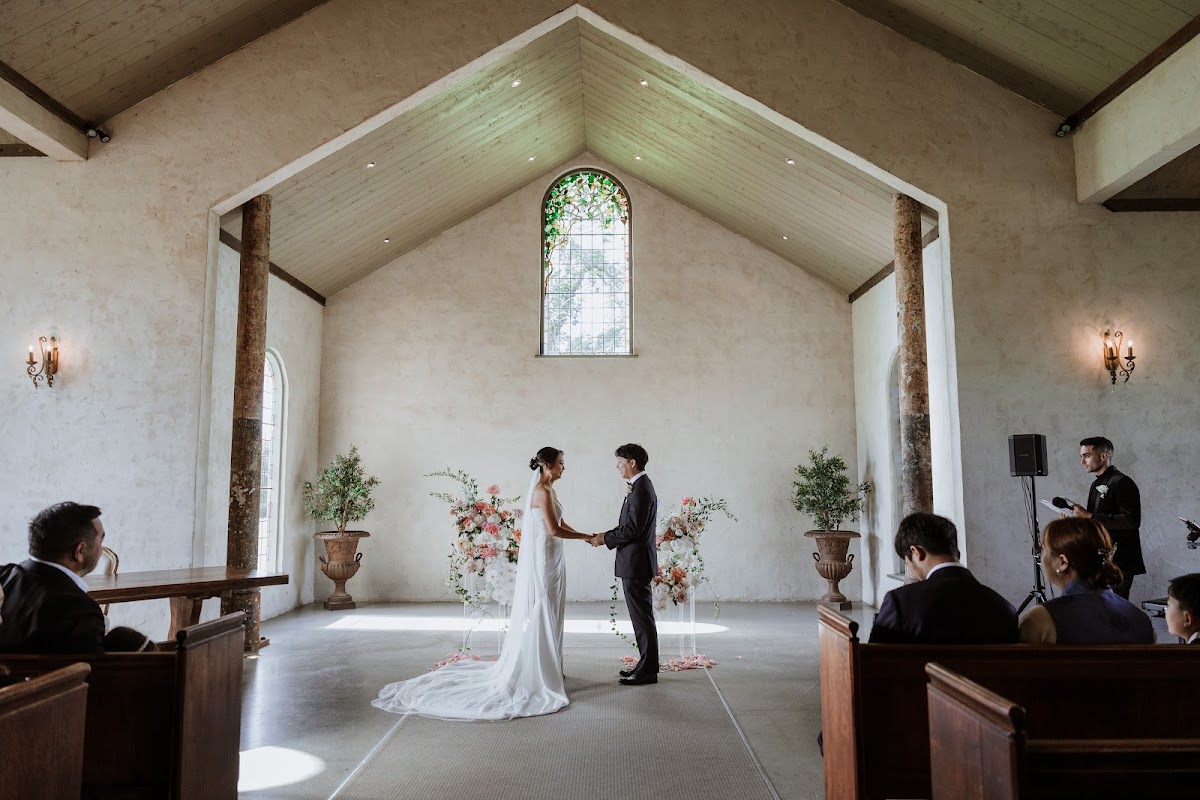


Photography is licensed stock from Unsplash, shown to evoke the setting. It does not depict a specific venue.
We will connect you with a planner who knows the paperwork.
Tell us where in Australia you are marrying and your date, and we will connect you with a local planner and celebrant who handle international couples and the notice with ease.
No cost to you. We reply within two business days. Your details go only to our team.
Subscribe to The Aisle.
A considered letter on the places worth marrying, sent when we have something genuinely worth your time.
Join free and get our season by destination cheat sheet, the best months to marry in each place.
The Destination Wedding Budget Planner
Every real cost category, indicative ranges by destination, and a season calendar, in one clear worksheet. Enter your email and we will send it over.